The short answer
A cat who throws up once, then eats, drinks and plays normally is often not in danger. Call your vet if they vomit several times in a day, have been vomiting regularly for weeks, if there's blood, or if they are lethargic, stop eating, have belly pain or may have swallowed a plant, something toxic or a piece of string. Kittens and senior cats should be seen sooner.
At a glance
- A single episode in a cat who seems fine is often not serious, but keep an eye on them.
- Throwing up often, even "just hairballs", isn't normal and is worth a vet visit.
- Blood, lethargy, a painful belly, refusing food: call the vet right away.
- Write everything down: time, appearance, frequency. That's what your vet will ask you.
Is it serious if my cat throws up?
Not necessarily: a one-off episode in a cat who stays bright and active is common and often passes on its own. What matters is how often it happens, what the vomit looks like and how your cat is doing right after.
The Cornell Feline Health Center points out that vomiting is a sign, not a disease. It can come from a meal eaten too fast or a hairball, but also from a stomach or bowel problem, kidney, liver or thyroid disease, diabetes, a foreign object or poisoning. That's why a cat who throws up often should be examined, even if they seem fine.
Ask yourself three simple questions:
- Is this the first time, or does it keep coming back?
- After throwing up, do they eat, drink, play and use the litter box as usual?
- Could they have swallowed something dangerous: a plant, a medication, a cleaning product, string, a hair tie?
Vomiting or regurgitation: what's the difference?
Vomiting is active: the cat's belly heaves, they make noises, then bring up contents that are often digested. Regurgitation is passive: food comes back up without effort, almost intact, often right after a meal.
The difference helps your vet, because the causes aren't the same: regurgitation points more toward the esophagus, vomiting toward the stomach, the intestines or a general illness. If you can, film it on your phone: a few seconds of video beat a long description.
What does the color and look of cat vomit mean?
The appearance gives a clue, never a diagnosis. This table helps you decide what to do, but if in doubt, your vet has the final word.
| What you see | What it can mean | What to do |
|---|---|---|
| Almost whole kibble, right after a meal | Meal eaten too fast, or regurgitation | Keep an eye on it. If it happens again, mention it to your vet |
| A hairball, now and then | Hair swallowed while grooming | Brush more often. If it's frequent, see the vet: it isn't "normal" |
| Yellow or foamy liquid, empty stomach | Bile, often on an empty stomach, but other causes too | Note how often it happens and talk to your vet if it keeps coming back |
| Streaks of red blood, or a coffee-grounds look | Bleeding in the digestive tract | Call the vet right away |
| Bits of plant, string or plastic | Swallowed an object or a possibly toxic plant | Call the vet right away, without waiting for signs |
| Vomiting over and over, can't even keep water down | Risk of dehydration, possible blockage | Emergency |
When should I call the vet right away?
Call without waiting if your cat throws up several times in a row or shows any of the signs below. These are the signs listed by the Cornell Feline Health Center and the MSD Veterinary Manual.
Call your vet or an emergency clinic right away if:
- they vomit several times in a day, or can't keep water down;
- there's blood in the vomit, or it looks like coffee grounds;
- they're lethargic, hiding, or won't get up;
- they haven't eaten in more than 24 hours;
- their belly looks swollen or seems painful when you touch it;
- they may have swallowed a toxic plant (like a lily), a medication, a cleaning product, string or a hair tie;
- they vomit and also have heavy diarrhea, or strain to pee with nothing coming out;
- it's a kitten, a senior cat, or a cat already being treated for an illness.
If you're not sure what they swallowed, never make them vomit yourself and never give them human medication. Call your vet or an animal poison control service (in the US, the ASPCA Animal Poison Control Center or the Pet Poison Helpline). To know which plants are a problem, read the list of plants toxic to cats.
My cat throws up hairballs often: is that normal?
No, not when it's frequent. A cat may bring up a hairball once in a while, but regular vomiting, even with hair in it, is worth a trip to the vet.
The Cornell Feline Health Center is clear on this: many owners think weekly vomiting is just part of life with a cat, when chronic vomiting can reveal a digestive or general illness. A senior cat who throws up more often, loses weight and drinks more should be seen quickly.
What can I do in the meantime if it's not an emergency?
If your cat threw up only once and seems fine, watch them, leave fresh water out and note what happens over the next few hours. Don't give them anything else without your vet's advice.
- Note the time, appearance and amount, and take a photo of the vomit.
- Watch their behavior: are they eating, drinking, using the litter box, playing?
- Look for clues: a chewed plant, missing string, a new food, a spilled product.
- Count the episodes over several days. Throwing up once a day for a week doesn't mean the same thing as a single episode.
This is where Miaou's evening check really helps: in 10 seconds you note whether they threw up, ate and drank, and the app spots what changes over several days. No more wondering "was it Tuesday or Thursday?" in front of your vet. To learn more, see Miaou's health tracking.
Can an app tell me if it's urgent?
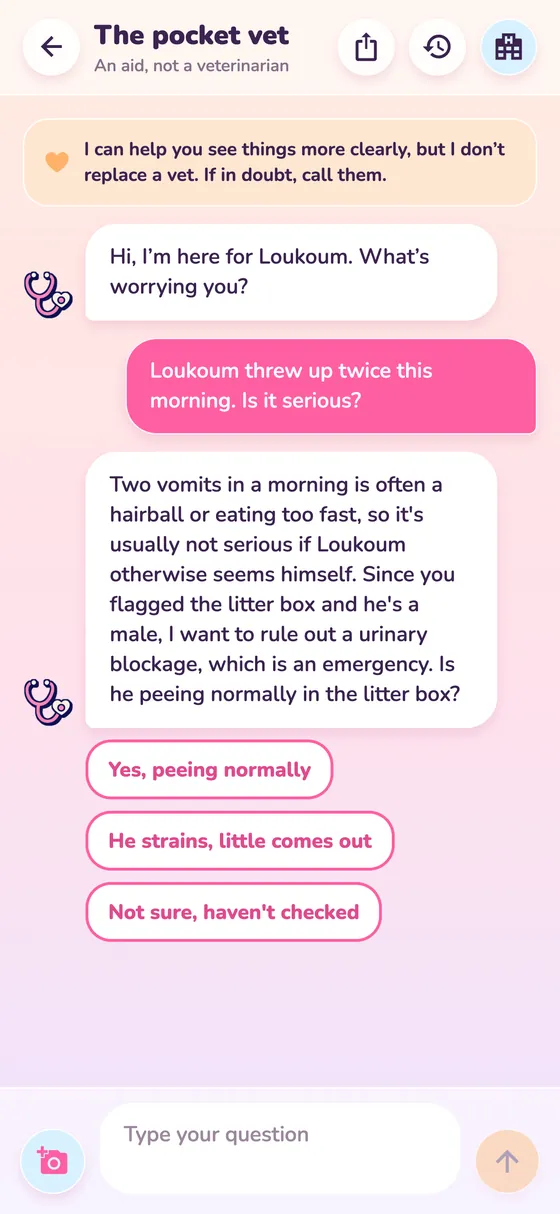
Yes, to help you decide what to do right now, but not to replace an exam. Miaou's pocket vet asks its questions one at a time, looks at your photo if you add one, gives you an urgency level and shows you the vets nearby.
It doesn't make a diagnosis and never gives a medication dose. Miaou is an aid, not a veterinarian: at the slightest warning sign, it will tell you to call your vet. You can then share the conversation history with them. Everything is explained on the pocket vet page, and if your cat is also refusing food, read my cat won't eat: when it's serious.
Frequently asked questions
My cat threw up once. Do I need to go to the vet?
Not necessarily. If they stay bright, eat and drink normally, keep an eye on them and note what happens. Call if they vomit again, seem lethargic or may have swallowed something dangerous.
Why does my cat throw up after eating?
They may be eating too fast, or regurgitating rather than vomiting. If it happens often, talk to your vet: there are many possible causes.
Is it normal for my cat to throw up hairballs every week?
No. Regular vomiting, even with hair, is worth a vet visit to look for a cause.
Can I give my vomiting cat some medication?
No, don't give any medication without your vet's advice. Some human medications are very dangerous for cats.
Sources
- Vomiting (Cornell Feline Health Center)
- Cat Owners (MSD Veterinary Manual)
- Lily poisoning in cats (International Cat Care)
Miaou is an aid, not a veterinarian. If in doubt, or in an emergency, call a vet.